

Most people do not save serious money by squeezing one more coupon out of a grocery trip or denying themselves every small pleasure. They save serious money by changing the habits attached to the biggest, most repeated expenses. In 2024, average U.S. household spending was led by housing, transportation, and food, with housing and transportation alone accounting for 50.4% of total spending. Food averaged $10,169 per year, including $3,945 spent on food away from home. That is why the highest-payoff frugal habits usually live in recurring bills, groceries, restaurant routines, transportation, and debt costs rather than in random one-off cuts. (bls.gov)
Real frugality is not the same as buying the cheapest version of everything. It is the practice of spending carefully on what genuinely supports your life while removing waste, drift, duplication, and preventable fees. A lower premium is not automatically frugal if it leaves you underinsured, and a cheaper grocery haul is not a win if a meaningful share of it gets thrown away. The goal is durable savings that still protect comfort, safety, reliability, and sanity. (content.naic.org)
- Start with recurring expenses and other large categories. That is where budget changes compound fastest. (bls.gov)
- The best frugal habits reduce waste you barely notice: unused subscriptions, preventable food waste, credit card interest, overdraft fees, idle utility use, and overpriced insurance. (consumer.ftc.gov)
- Frugal does not mean extreme. Sustainable defaults usually beat short bursts of deprivation.
- If a habit saves money but creates safety, coverage, or burnout problems, it is not as frugal as it looks.
- The biggest annual payoff usually comes from stacking several ordinary habits, not finding one magical trick.

A better filter for money-saving advice
A useful way to sort frugal advice is what I would call the Recurring-First Rule. It is not an industry standard, just a practical decision rule: attack the expense that repeats, belongs to a large spending category, and is easy to monitor. That means a $40 monthly leak often matters more than a heroic one-time cut, because that $40 shows up 12 times a year. It also means reviewing real statements is more valuable than guessing where the money goes. The CFPB recommends looking back over several months and making sure less frequent expenses are included, because those irregular charges are exactly where many budgets quietly fail. (consumerfinance.gov)
- Recurring beats occasional. If the charge happens every month, one change fixes many future transactions.
- Large categories beat cute categories. Food, transportation, insurance, utilities, and debt usually matter more than novelty savings challenges.
- Low-friction systems beat willpower. Calendars, automatic transfers, low-balance alerts, and default meal plans usually last longer than daily self-negotiation.
The table below helps prioritize where to start. It is less about finding the “best” habit in the abstract and more about finding the first habit with the highest leverage in real life, especially in the categories where households already spend the most. (bls.gov)
| Area to attack | Strong signal | Why it matters | Start with |
|---|---|---|---|
| Recurring bills | You cannot name every automatic charge from memory | One fix can lower the next 12 bills | Subscription list, phone plan review, insurance quotes |
| Food routines | Groceries spoil or takeout fills weeknight gaps | Food repeats several times a day and waste compounds weekly | Meal planning, leftovers plan, pantry-first shopping |
| Debt and fees | You carry a balance or pay surprise bank fees | Interest and fees buy nothing and can snowball | Statement-balance habit, overdraft changes, sinking funds |
| Transportation | You make lots of short separate trips | Fuel, tire wear, and maintenance stack together | Trip chaining, tire checks, maintenance calendar |
| Utilities and home upkeep | Bills jump for unclear reasons | Leaks and idle energy use repeat monthly | Thermostat schedule, leak checks, standby-power cleanup |
For example, a household that trims $30 a month in unused subscriptions, saves $40 a month by re-shopping insurance, wastes $35 less food each week, and avoids one $35 bank fee each month ends up more than $3,000 ahead over a year. That is only a hypothetical example, not a forecast, but it shows why ordinary routines often outperform dramatic sacrifices.
Bills and money systems first
1) Audit the last 90 days of spending, not your intentions
If a budget never seems to match what is left in checking, start here. Pull the last three months of bank and credit card transactions and sort them into broad categories before making any cuts. The CFPB specifically recommends looking at checking and credit card history over several months and including less frequent expenses such as insurance, medical bills, tuition, gifts, and vacations. This habit works because it replaces a story about your spending with evidence. It also shows whether the real problem is groceries, convenience food, fees, shopping drift, or simple underestimation. (consumerfinance.gov)
2) Put every recurring charge on one list
Create a single list of subscriptions, memberships, insurance premiums, app renewals, cloud storage, streaming services, and annual charges. Add the amount, billing date, renewal date, and cancellation path. This sounds basic, but it solves two common problems at once: forgetting what is active and forgetting when “free” or low-cost trials turn into normal charges. The FTC advises keeping records of cancellation requests and checking statements afterward to make sure charges actually stop. A frugal household does not merely cancel things; it verifies that the cancellation worked. (consumer.ftc.gov)
3) Re-shop insurance before each renewal, but compare like with like
Insurance is one of the least glamorous places to save money and one of the most important. The NAIC notes that premium quotes are a useful comparison tool for auto insurance, but the comparison only makes sense when the same information and coverage are used for each quote. For homeowners insurance, the NAIC also notes that higher deductibles can reduce premiums, but that tradeoff only works if the deductible is an amount you could actually absorb. In other words, shop aggressively, but do not confuse lower premiums with better value if you get there by stripping useful coverage. And if a car is financed or leased, remember that some coverages may be required by the lender or lessor. (content.naic.org)
4) Turn irregular costs into monthly sinking funds
A large share of “emergencies” are not true surprises. Car repairs, annual subscriptions, back-to-school costs, holiday gifts, pet care, and travel are often predictable even when their exact timing is not. The CFPB says automatic recurring transfers are one of the easiest ways to make savings consistent. That is what makes sinking funds so effective: they transform future stress into a routine monthly expense. Frugality is not just about cutting bills; it is also about preventing predictable expenses from turning into credit card debt. (consumerfinance.gov)
5) Stop paying credit card interest unless you are in a deliberate payoff phase
The CFPB notes that when you carry a balance, most card companies charge interest from the billing date until they receive your payment. That makes revolving credit one of the most expensive forms of lifestyle drift. The strongest long-term habit is paying the statement balance in full by the due date whenever possible. If that is not realistic right now, the frugal move is to stop adding fresh discretionary spending to the card while you work a payoff plan. Whether you prefer a highest-interest-first approach or another method that keeps you consistent, the key is to treat interest as a direct enemy of every other savings goal. (consumerfinance.gov)
6) Eliminate bank-fee leakage
Overdraft fees are especially frustrating because they usually signal a timing problem, not a meaningful purchase decision. The CFPB says consumers can opt out of debit and ATM overdraft coverage so the transaction is generally declined instead of triggering an overdraft fee. It also notes that linking checking to savings may still involve a transfer fee, but often less than the fee for an overdraft. Add low-balance alerts and a small cash buffer, and this becomes one of the easiest habit upgrades in the entire article. (consumerfinance.gov)
Food habits that matter more than coupons
Food deserves special attention because it is both a major household category and a category shaped by daily behavior. BLS data show food accounted for 12.9% of household spending in 2024, and the EPA estimates the cost of food waste at $728 per person per year, or $2,913 for a household of four. That combination is why food habits can create very large savings without requiring a joyless kitchen. (bls.gov)
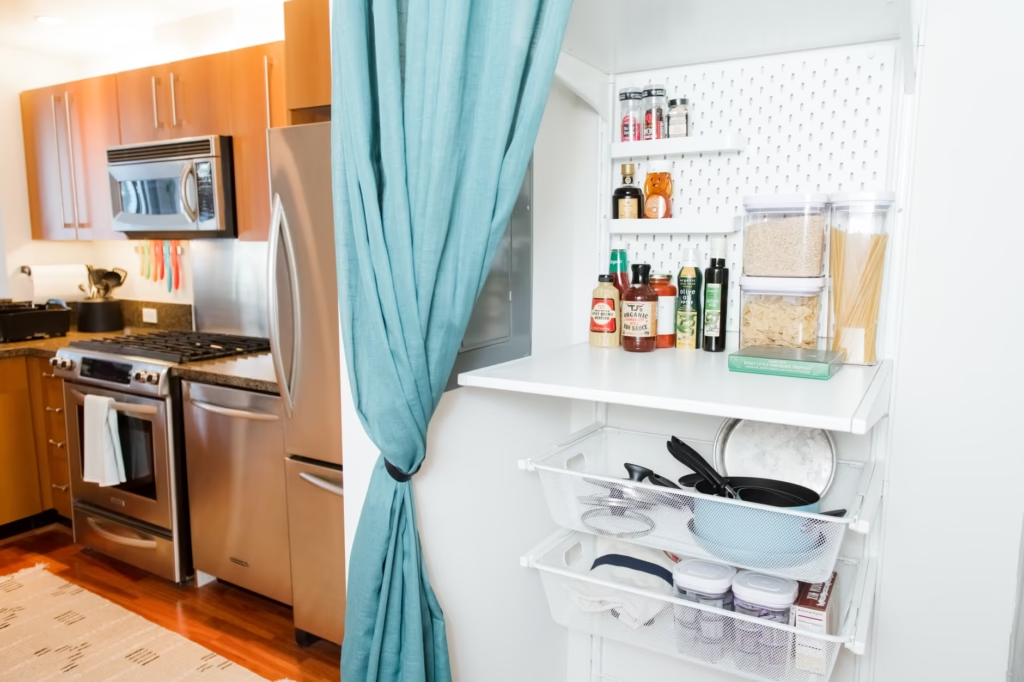
7) Plan meals around what is already in the house
Before making a grocery list, check the pantry, freezer, fridge, and produce drawer. Then build meals around what is already there and buy only the missing pieces. This habit reduces duplicate purchases and forces older ingredients to get used before they become waste. It also makes grocery shopping more realistic because the plan is based on inventory, not fantasy. If schedules are unpredictable, plan ingredients or meal templates instead of seven fully scripted dinners. EPA guidance on preventing wasted food at home emphasizes that planning, prepping, and storing food can help households waste less and save money. (epa.gov)
8) Give leftovers a job immediately
A lot of food waste is really decision waste. Dinner leftovers stay in the fridge because nobody decided whether they are tomorrow’s lunch, a freezer meal, or an ingredient for something else. A useful habit is to label leftovers while cleaning up and put them in an obvious “eat soon” zone. This is a small operational change, but it directly attacks one of the most expensive forms of household waste. The EPA’s home food-waste guidance makes the same larger point: small shifts in how you shop, prepare, and store food can save time and money. (epa.gov)
9) Make restaurant and delivery spending intentional
Food away from home is not morally wrong, and trying to eliminate it entirely often backfires. The better habit is to decide in advance how it fits your week. BLS data show the average household spent $3,945 on food away from home in 2024. That category includes restaurants, takeout, and delivery, which means even a modest reduction in frequency can matter. For some households, the practical default is weekday home meals and one planned takeout night. For others, it is carrying backup food so a hectic day does not automatically become a delivery day. (bls.gov)
10) Buy on unit price and realistic usage, not just shelf price
A large package is only cheaper if it gets used before it goes stale, freezer-burns, or gets lost behind other food. The same is true for warehouse-store quantities of toiletries, cleaning products, or snacks. Frugal shoppers compare unit price, but they also compare consumption speed and storage space. The cheapest chicken is not the best deal if it sits untrimmed in the fridge until takeout sounds easier. And a more expensive convenience item can be rational if it reliably prevents restaurant spending or food waste. The point is total cost of use, not just sticker price.
Transportation and household habits that compound quietly
Transportation is another high-leverage area because it is large enough to matter and routine enough to drift. In 2024, transportation accounted for 17.0% of average household spending. Household operating costs also hide in plain sight through energy waste and undetected leaks. These are exactly the kinds of expenses that feel normal until you change the routine behind them. (bls.gov)
11) Treat tire pressure and trip planning as money habits
NHTSA says underinflated tires reduce fuel economy, and its tire-safety guidance also connects tire condition to the larger cost of vehicle ownership. This turns routine maintenance into a frugal habit, not just a safety chore. Check pressure monthly and before long trips, and group errands so the car warms up once instead of being started repeatedly for separate short drives. No single gas-saving behavior is likely to transform your budget overnight, but transportation costs become much easier to control when vehicle use is planned instead of automatic. (nhtsa.gov)

12) Use thermostat setbacks instead of heating or cooling an empty home
The Department of Energy says setting your thermostat back 7° to 10°F for at least 8 hours per day can save as much as 10% per year on heating and cooling costs. That makes thermostat scheduling one of the few home habits with a very simple routine and potentially meaningful annual payoff. The key is consistency: program the schedule or create a reliable manual routine around work, school, and sleep. The tradeoff is that comfort, climate, health conditions, and HVAC design matter, so treat DOE guidance as a starting point rather than a universal setting for every home. (content.govdelivery.com)
13) Hunt leaks and standby power before buying new equipment
New gadgets are more exciting than small fixes, but small fixes often pay sooner. The DOE notes that standby power can be a significant contributor to product energy use, even when devices appear to be off. The EPA says undetected household leaks can waste thousands of gallons of water each year, driving bills higher than necessary and sometimes damaging the home. So before chasing a big appliance upgrade, check for dripping fixtures, silent toilet leaks, power strips full of idle electronics, and rooms full of always-plugged-in devices that rarely get used. (energy.gov)
14) Maintain the boring things you already own
Frugal households repair and maintain ordinary items earlier than most people think is necessary. That means replacing worn weatherstripping before it becomes an energy problem, sewing a loose button before a shirt becomes “ruined,” changing filters on schedule, and handling small home or car issues before they force expensive replacements. This is not permission to DIY beyond your skill, especially with brakes, structural work, gas lines, or electrical systems. It is simply the habit of treating maintenance as cost control instead of procrastination bait.
Habits that stop small purchases from becoming a lifestyle
15) Use a waiting rule, then look for used, borrowed, or refurbished options
Impulse spending rarely feels like impulse spending in the moment. It feels justified, efficient, deserved, or temporary. A waiting rule interrupts that story. Try 24 hours for smaller wants and 30 days for larger discretionary purchases. Keep a running list instead of buying immediately. If the item still feels useful after the waiting period, compare used, refurbished, rental, library, tool-library, or borrow-from-a-friend options before paying full retail. This works especially well for books, tools, hobby equipment, occasional event items, and furniture. The main exceptions are products where hygiene, fit, or safety history genuinely matter, such as some protective gear or other safety-critical items.
One more quiet leak worth reviewing: tax withholding. The IRS says too little withholding can lead to a tax bill or penalty, while too much means you do not have use of that money until you receive a refund. Some households intentionally prefer a larger refund as forced savings, but it is better as a conscious choice than an unnoticed default. (irs.gov)
Common frugality mistakes that erase the savings
- Cutting insurance coverage instead of shopping carefully. Lower premiums are not always lower risk. (content.naic.org)
- Buying bulk faster than the household can consume it. Cheap food that gets discarded is not cheap. (epa.gov)
- Trying to eliminate every convenience purchase. Habits that make daily life impossible often snap back into overspending.
- Ignoring bank fees and card interest while obsessing over tiny discounts. That is backward. (consumerfinance.gov)
- Treating one bad week as proof the plan failed. Frugal systems improve through adjustment, not perfection.
A 30-day reset to install these habits
- Pull the last 90 days of statements and mark every recurring charge, fee, and food-away-from-home purchase. (consumerfinance.gov)
- Pick one habit from each high-impact bucket: bills, food, and transportation or utilities. Do not try to overhaul everything at once.
- Set up one automation right away: a recurring transfer to savings, a low-balance alert, or a bill-renewal calendar. (consumerfinance.gov)
- Track only three numbers for the next month: grocery spend, restaurant or delivery spend, and miscellaneous recurring charges. Simple tracking is easier to sustain than an elaborate spreadsheet.
- At the end of 30 days, keep the habits that clearly saved money with manageable friction, and revise the ones that created too much inconvenience. If your income or family situation changed, review withholding as well. (irs.gov)
This review step matters. Some habits save money but create enough friction that they will not last. Others look minor on paper but turn out to be powerful because they remove a repeated decision. In most households, the winning frugal habits are the ones that feel a little boring after a month because they have become normal.
The payoff is usually in the stack, not one heroic cut
The most effective frugal life is not built on permanent self-denial. It is built on systems that keep recurring waste from blending into the background. Review the statements, tighten the recurring bills, plan food more deliberately, reduce avoidable fees, manage the house and car before problems grow, and give discretionary spending a pause button. A few of these habits may save only a little on their own. Stacked together over 12 months, they are exactly how ordinary households end up saving thousands.
Which frugal habits usually save the most the fastest?
Recurring bills, food away from home, insurance, and credit card interest usually deserve first attention because they are repeated expenses, and several are large household spending categories in national data. (bls.gov)
Should I build savings first or pay off debt first?
In many cases, a small emergency cushion and a few sinking funds help prevent new debt while you work on expensive balances. The CFPB’s savings guidance supports automatic recurring transfers, and its credit card guidance makes clear why carrying balances is so costly. (consumerfinance.gov)
How often should subscriptions and insurance be reviewed?
Subscriptions are worth checking monthly because small recurring charges are easy to miss, and the FTC recommends verifying that canceled charges actually stop. Insurance is worth reviewing at renewal time so quotes can be compared on matching coverage and deductibles. (consumer.ftc.gov)
Can frugality go too far?
Yes. It goes too far when the savings come from underinsuring major risks, neglecting maintenance, buying far more food than the household can use, or creating a routine so restrictive that it triggers rebound spending later. Good frugality lowers waste without increasing larger costs or risks. (content.naic.org)
References
- U.S. Bureau of Labor Statistics: Housing and transportation accounted for 50 percent of household spending in 2024 – https://www.bls.gov/opub/ted/2026/housing-and-transportation-accounted-for-50-percent-of-household-spending-in-2024.htm
- Consumer Financial Protection Bureau: Assess your spending – https://www.consumerfinance.gov/owning-a-home/prepare/assess-your-spending/
- Consumer Financial Protection Bureau: An essential guide to building an emergency fund – https://www.consumerfinance.gov/an-essential-guide-to-building-an-emergency-fund/
- Consumer Financial Protection Bureau: Know your overdraft options – https://www.consumerfinance.gov/consumer-tools/bank-accounts/know-your-overdraft-options/
- Consumer Financial Protection Bureau: If I pay off my credit card balance when it is due, is the company allowed to bill – https://www.consumerfinance.gov/ask-cfpb/if-i-pay-off-my-credit-card-balance-when-it-is-due-is-the-company-allowed-to-charge-me-interest-for-that-month-en-48/
- Federal Trade Commission: How to stop subscriptions you never ordered – https://consumer.ftc.gov/consumer-alerts/2023/05/how-stop-subscriptions-you-never-ordered
- National Association of Insurance Commissioners: Consumer Auto – https://content.naic.org/consumer/auto-insurance.htm
- National Association of Insurance Commissioners: Consumer Homeowners – https://content.naic.org/consumer/homeowners-insurance.htm
- U.S. Environmental Protection Agency: Estimating the Cost of Food Waste to American Consumers – https://www.epa.gov/land-research/estimating-cost-food-waste-american-consumers
- U.S. Environmental Protection Agency: Leak Detection and Flow Monitoring Devices – https://www.epa.gov/watersense/leak-detection-and-flow-monitoring-devices
- Department of Energy: Home Upgrades – https://www.energy.gov/save/home-upgrades
- Department of Energy: Measuring Standby Power – https://www.energy.gov/cmei/femp/measuring-standby-power/