
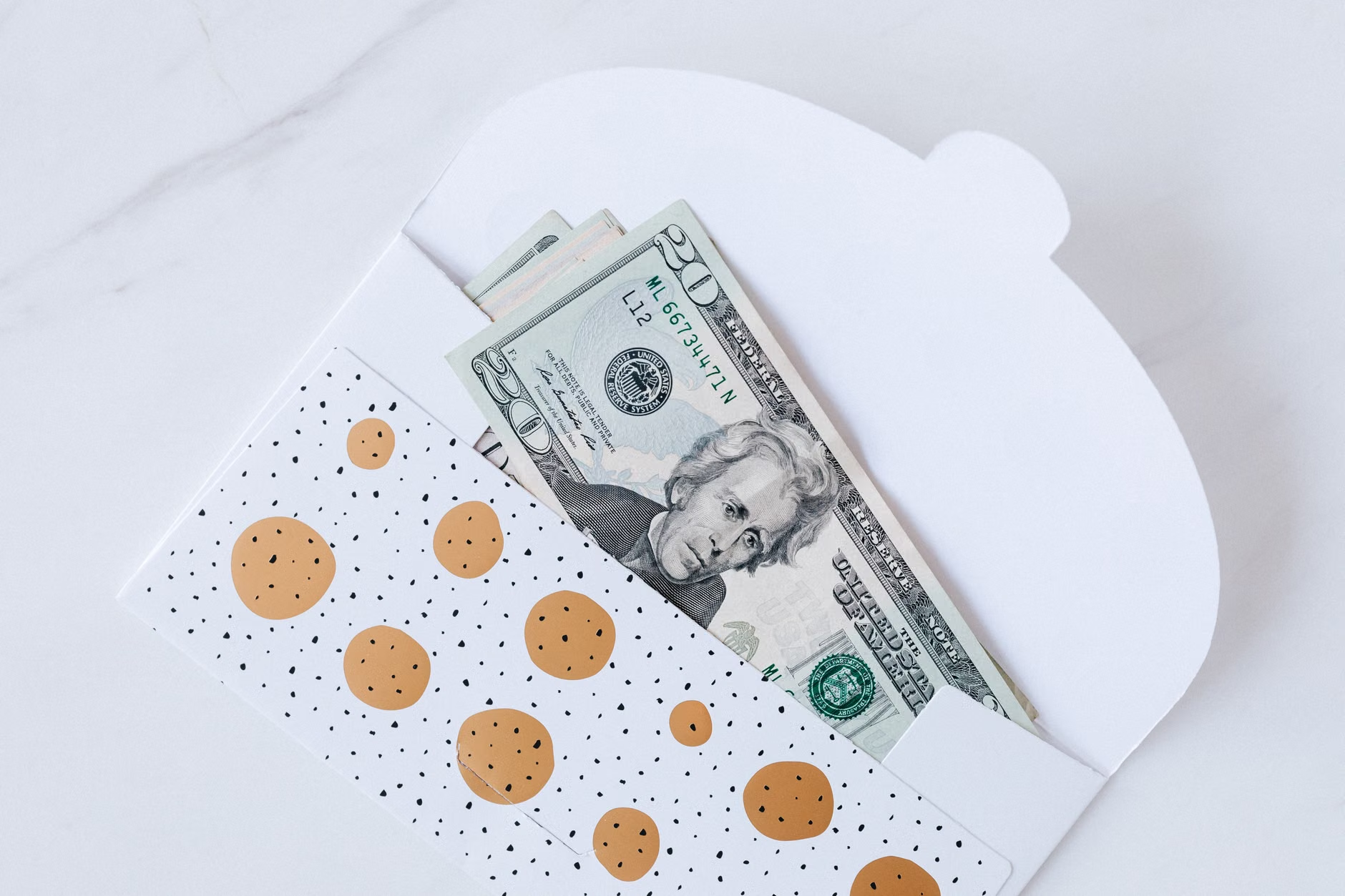
Cash stuffing is the old envelope-budget idea with a newer name: withdraw a set amount of cash, divide it into categories, and stop spending from a category when that envelope is empty. In plain terms, yes, it can work. But it works best as a behavior tool, not as a complete financial system. If your goal is to rein in takeout, impulse shopping, or weekly overspending, cash can create a hard limit that a debit card often does not. If your goal is to manage every bill, build savings safely, and run a household with lots of online payments, the method starts to show its limits. (personal-finance.extension.org)
Why cash stuffing helps some budgets stick
The biggest advantage is visibility. Cash turns a vague monthly goal into a physical boundary. A grocery envelope with three twenties left sends a much clearer message than a checking balance that also contains rent money, utility money, and next week’s gas. That is why the method tends to help most in flexible categories where spending decisions happen repeatedly during the week: groceries, dining out, coffee, personal spending, kids’ extras, or entertainment.
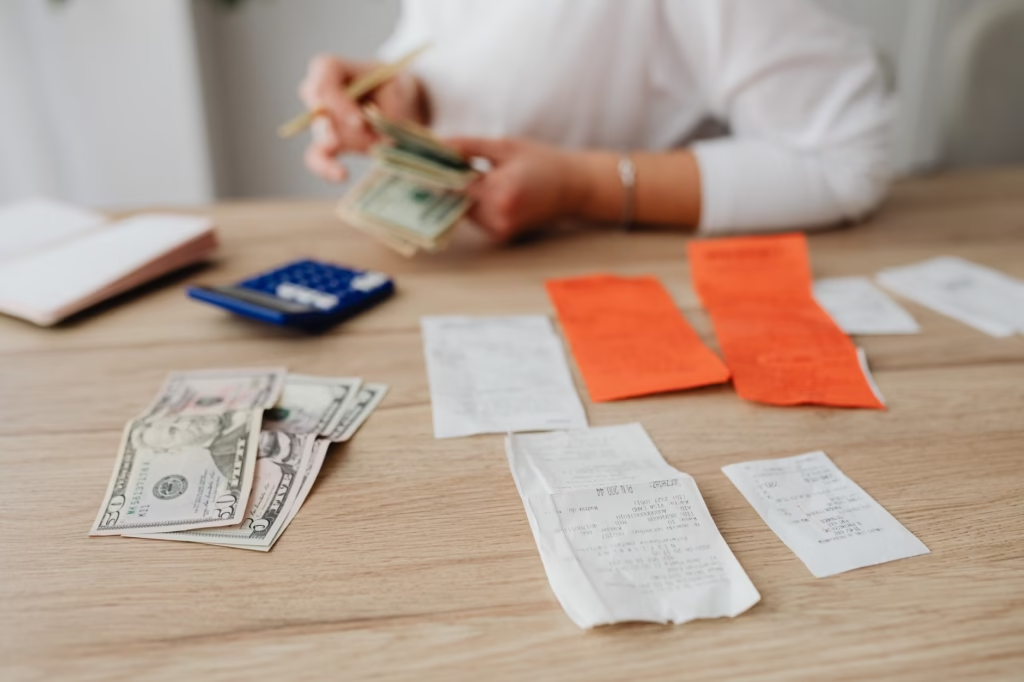
It also forces better awareness. The CFPB recommends taking a realistic look at current spending, saving receipts or recording purchases, and building a monthly budget that reflects what is actually happening, including a miscellaneous category for expenses that never fit neatly into a plan. Cash stuffing works best when it is built on that kind of honest tracking rather than wishful numbers. (consumerfinance.gov)
Where the envelope method breaks down
The common mistake is treating cash stuffing like a full money strategy instead of a spending-control tactic. It does not solve a basic math problem. If expenses are higher than take-home pay, envelopes will not fix that; they will only reveal it faster. The same goes for irregular costs such as car repairs, annual subscriptions, gifts, or school fees. If those are not planned for somewhere in the budget, a neat row of envelopes can create false confidence.
It is also awkward for modern spending patterns. Rent, utilities, insurance, debt payments, and many subscriptions are easier to handle from a bank account. Online shopping can bypass the discipline that makes the method useful in the first place. Shared finances add another complication: when two adults are spending from the same categories, paper cash can be less transparent than a shared app or bank record.
Large cash balances come with real tradeoffs. The FDIC says cash kept in a home safe or in a safe deposit box is not protected by FDIC deposit insurance if it is stolen or damaged, and it does not earn interest while it sits there. (fdic.gov)
That security issue matters more than many cash-stuffing videos admit. Cards and bank accounts are not risk-free, but they do come with legal protections in situations involving unauthorized use. The FTC notes that federal law limits liability for lost or stolen credit, ATM, and debit cards, with the exact protection depending on the type of card and how quickly the loss is reported. Paper cash does not offer that same recovery path once it is gone. (consumer.ftc.gov)
A practical way to test it without overhauling your whole life
The smartest way to try cash stuffing is not to move everything to cash. Treat it like a 30-day experiment for the categories that cause the most trouble.
- Review the last month of spending first. Bank history, card statements, receipts, or a notebook all work. The point is to start with real numbers, not a number that merely sounds disciplined. The CFPB specifically advises saving receipts or recording every expense and not leaving anything out. (consumerfinance.gov)
- Choose only two to four flexible categories for cash. Good starting candidates are groceries, dining out, coffee, personal spending, and entertainment. Leave fixed bills and automatic payments in your account.
- Fund envelopes once per paycheck and add a small miscellaneous cushion. That helps absorb the odd expense that would otherwise throw the whole system off track.
- Track every purchase. Write it on the envelope, keep the receipt inside, or log it in a note on your phone. If one envelope runs dry, either stop spending there or intentionally move money from another category.
- Review the month honestly. Which envelope emptied first? Which one still had cash? Did online purchases keep slipping around the system? Use that review to adjust next month’s amounts.
A simple hypothetical example: suppose the dining-out envelope is empty by the second week, while groceries still have money left. That does not automatically mean the method failed. It may mean restaurant spending is the real pressure point, or that the grocery budget is too high because more meals are being bought prepared. The value of the system is that it makes the pattern visible quickly.
For many households, the best version is a hybrid: keep bills, savings, and emergency funds in insured accounts, then use cash only for the categories where physical limits help most. That approach keeps the main behavioral benefit of cash stuffing without turning routine banking, recordkeeping, and security into a bigger problem than overspending itself.
So, does the envelope method really work? Yes, for the right job. It is a useful brake on everyday spending, especially if card swipes feel too frictionless. It is much less useful as a stand-alone system for bills, savings, and long-term financial planning. Use it where it adds control, and let your bank account handle the rest.
References
- Financial Security for All (Extension): When Prices Rise: Living on Your Income – https://personal-finance.extension.org/when-prices-rise-living-on-your-income/
- Consumer Financial Protection Bureau: Assess your spending – https://www.consumerfinance.gov/owning-a-home/prepare/assess-your-spending/
- FDIC: Five Things to Know About Safe Deposit Boxes, Home Safes and Your Valuables – https://www.fdic.gov/consumer-resource-center/five-things-know-about-safe-deposit-boxes-home-safes-and-your-valuables
- Federal Trade Commission: Lost or Stolen Credit, ATM, and Debit Cards – https://consumer.ftc.gov/articles/lost-or-stolen-credit-atm-and-debit-cards