
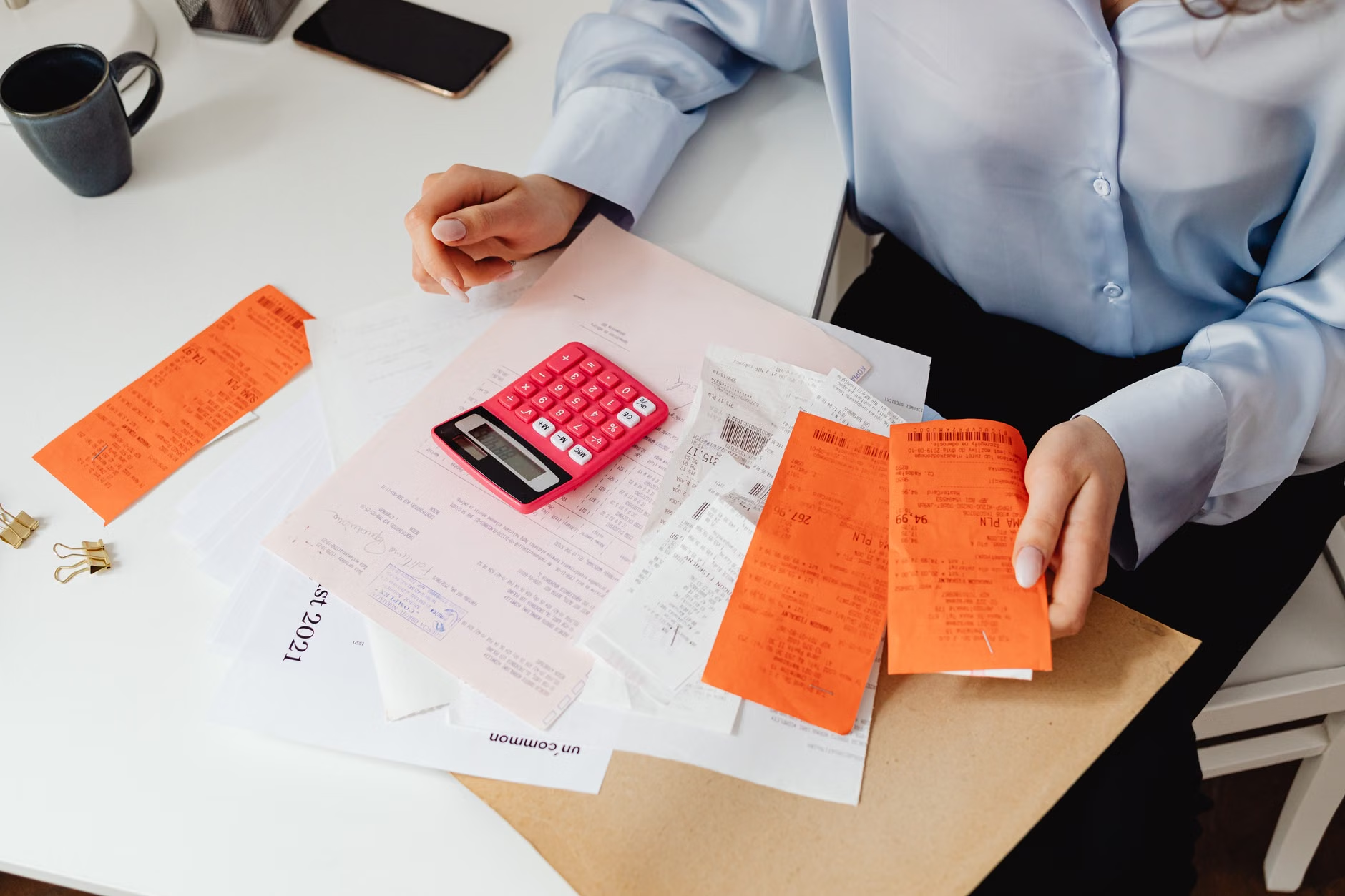
Getting out of the paycheck-to-paycheck cycle usually starts with a less dramatic move than people expect: stop treating it as a vague spending problem and start treating it as a cash-flow problem. The goal is to create breathing room between the day money comes in and the day bills go out, then protect that gap with a small emergency cushion. Official budgeting guidance centers on listing income, bills, and actual spending, while the CFPB specifically points to cash flow, meaning the timing of money in and money out, as a major reason people run short even when they are trying to be careful. (consumer.gov)
Run a one-paycheck audit before you cut anything
Do not start with a monthly guess. Start with one real pay period. Consumer.gov’s budgeting guidance begins with bills and pay stubs, and the CFPB’s emergency savings guide emphasizes tracking when income lands and when expenses hit. That makes one question much easier to answer: Is total spending too high, or is the timing of bills draining the account before the next deposit arrives? (consumer.gov)
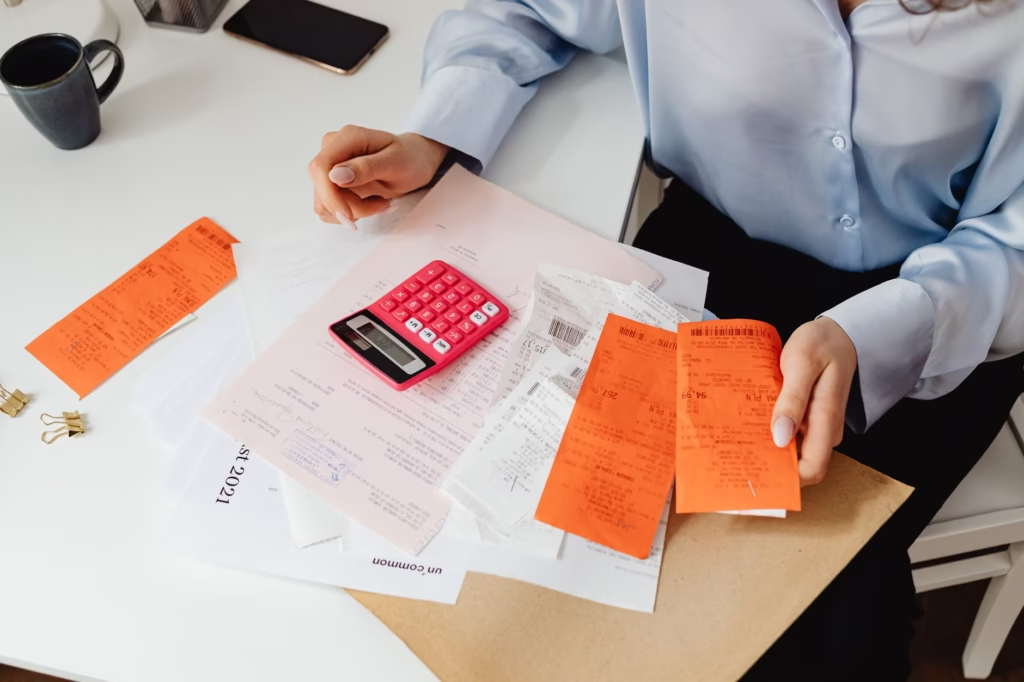
- Write down the net amount of your next paycheck, not gross pay.
- List every bill due before the next payday, including autopays and subscriptions.
- Add essential spending for that stretch: groceries, gas or transit, prescriptions, and childcare.
- Mark any irregular expense that tends to blindside the month, such as annual fees, school costs, or pet medication.
- See what is left before optional spending starts.
If that number is negative before restaurants, shopping, or entertainment, the core issue is probably not impulse spending. It is that fixed obligations are too large for current income. If the number looks fine on paper but the account still runs dry mid-cycle, the problem is usually timing. If surprise costs keep knocking the plan off course, the problem is a missing buffer. Those are different problems, and they need different fixes. (consumerfinance.gov)
A small buffer matters more than a perfect budget
People living paycheck to paycheck often hear “save first” and “pay off debt first” as if only one can be right. In practice, a starter emergency fund is what keeps a small problem from turning into new debt. The CFPB defines emergency savings as cash set aside for unplanned expenses like repairs, medical bills, or a loss of income, and notes that even a small amount can provide some financial security. (consumerfinance.gov)
- Set up an automatic transfer for the day after payday, or split direct deposit if that option is available at work.
- Send part of windfalls, such as a tax refund or cash gift, straight to savings instead of absorbing it into normal spending.
- Turn irregular expenses into monthly sinking funds so they stop arriving as “emergencies.”
There is a real tradeoff here: money sent to savings is money not sent to debt this month. But if every flat tire, copay, or utility spike goes back on a credit card, debt payoff keeps restarting. A modest cash cushion while staying current on required payments is often the sturdier first move. Once that cushion exists, extra money can go after expensive debt much more effectively. (consumerfinance.gov)
Focus on the recurring bills that erase each paycheck
Short-term spending freezes can help for a week, but recurring bills decide whether the month works. A budget only improves when income is compared honestly against bills and expenses, so the categories that repeat every month are the ones most likely to change the outcome. If rent, car costs, insurance, phone service, or childcare eat most of each check, canceling a few subscriptions will not solve the underlying squeeze. (consumer.gov)
- Look at housing first. A roommate, lease negotiation, or lower-cost place changes every future paycheck, not just this one.
- Review transportation next. A car payment, insurance premium, parking costs, or a second vehicle can quietly dominate a budget.
- Ask whether due dates can be moved and whether service levels can be reduced on things like phone plans, internet, or memberships.
A simple hypothetical shows the difference. Imagine someone who keeps trimming grocery and entertainment spending but still runs out of money three days before payday. If the one-paycheck audit shows rent and car costs consume most of the deposit before food and gas are even added, stricter willpower is not the real solution. The fix has to involve a lower recurring bill, higher income, or both.
If essentials still do not fit, switch to triage mode
If the audit shows income will not cover essential bills, do not handle the month with silence and guesswork. The CFPB’s bill-prioritization tool advises making a short-term plan, protecting housing and income, keeping needed insurance, meeting court-ordered obligations, and contacting companies you cannot pay instead of simply ignoring the bill. (files.consumerfinance.gov)
This is the moment to act early. Late fees, shutoff notices, repossession risk, and eviction risk usually get harder to manage once a bill has been ignored for weeks. (files.consumerfinance.gov)
That means calling the landlord, mortgage servicer, utility company, or lender before the account is deeply late and asking what hardship, repayment, or due-date options exist. If housing is at risk, HUD says its housing counseling program connects people with participating agencies and certified counselors who help families obtain, sustain, and retain housing. (hud.gov)
Stopping the paycheck-to-paycheck cycle is rarely one big breakthrough. It is usually one clean pay-period audit, one starter buffer, and one meaningful recurring cost change at a time. If the numbers still do not work after that, the problem is bigger than day-to-day discipline, and it is worth getting formal help before fees and missed payments make the hole deeper. (files.consumerfinance.gov)
References
- Making a Budget | consumer.gov – https://consumer.gov/your-money/making-budget
- An Essential Guide to Building an Emergency Fund | Consumer Financial Protection Bureau – https://www.consumerfinance.gov/an-essential-guide-to-building-an-emergency-fund/
- Prioritizing Bills Tool | Consumer Financial Protection Bureau – https://files.consumerfinance.gov/f/documents/cfpb_your-money-your-goals_prioritizing-bills_tool.pdf
- Housing Counseling | U.S. Department of Housing and Urban Development – https://www.hud.gov/stat/sfh/housing-counseling